
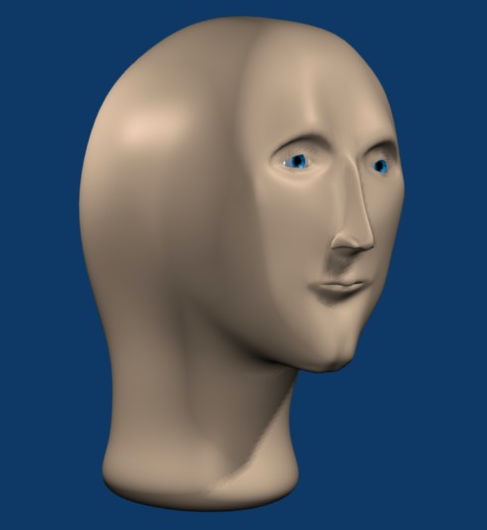
Oh I assumed it was a cocktail thing, but now I’m not so sure
- 0 Posts
- 17 Comments
Joined 5 years ago
Cake day: July 18th, 2021
You are not logged in. If you use a Fediverse account that is able to follow users, you can follow this user.
Huh. I hope we can get to understand the post by talking about it. I’m not trying to be condescending or annoying. I’m trying to see what you see. What did you think at first the image showed and how did the comment about tankies lead you to second-guess?
This post assumes politics and ethics are mutually exclusive, but in reality they are not. Politics is the distribution of political goods, and we are constantly evaluating those distributions as good or acceptable or not. Evaluating something as good or not can only ever happen if we hold ethical stances. In other words, politics always requires ethics.
I understand that the purpose of this post is to say something is fundamentally different about today compared to the past. But would you say the civil rights movement was less about ethics and more about politics? What about anti-slavery? Suffrage? Feminism? Labor rights in the late nineteenth century?

Time to dust off my Google bookmark and contribute to those searches!
[I don’t have a Google bookmark but if I did it would be dusty]
Huh. Turns out UV resistance is a consistent consideration when making sun-exposed 3D prints! Thanks for the response!
This looks so cool but a part of me is terrified of them slowly and unevenly turning yellow, just like an old phone case of mine 🥲
Do you know if it yellows over time or with sun exposure? Friends with transparent phone cases usually end up with yellow cases, unless they specifically have some specially treated plastic. I don’t know if that is rare in filaments
Same. I actually thought it was Bezos before I realized it couldn’t be.
It sounds as if you think the USA is not a democracy, and I can agree with that sentiment to an extent. For example, I see how neo-conservatism and neoliberalism are whacking their axes at the forest of democracy in the USA. I also see how elites everywhere try to avoid investing in humanity, avoid paying back to the societies that made them rich in the first place, including in the USA. In fact, I’d argue that the elites in the USA are shackling people’s hands and covering their mouths so that they work for their corporate overlords without questioning anything.
If I agree with that then how could I possibly believe anything else? Do I not believe the narrow narrative that America is anything but a democracy? Well, do you believe that the millions of Americans who have striked or protested for their rights are shackled and mouth-covered? Do you believe that democracy is defined narrowly as suffrage? Or do you believe that democracy is defined as making people more capable so that they value freedom and therefore strike or protest to transform their institutions to build the capacities of everyone?
I see how suffrage within a constrained context like in the USA leads to awful results.
However, if democracy is stuffed into the small box of suffrage, its potential is limited. If, instead, it’s spread so that it grows everyone’s capabilities, then you see something very different. You see hundreds of thousands or millions of people in the street, demanding change against authoritarianism, against unnecessary cruelty, against egotism (“me me me my nation my family my religion my clan my precious me me me”).
So democracy tends to optimize for capacity building, democratic value orientations, and institutional capacity construction. In other words, it makes people more capable, it makes people care more about freedom for themselves and others, and it makes institutions guarantee that people can build their capacities to be free.
In fact, you can quote me on this, but the USA right now is way more anti-democratic than its people are and therefore there will be massive protests. Those protests will not be against democracy; they are democracy in action.
You can check out Christian Welzel and the World Value Survey literature to see why I say what I say.
Adding to what others in thread have said, there are languages that are more usable and are more user-centric.
SFW edit: There are automatic transmission cars and manual transmission cars, both made for humans, one easier than the other. There are calculators that can compute lots of values and mental math classes, both for humans, one easier than the other. Ergonomics matter.
Although I do concede that, depending on the context, knowing more about something is better than not. I wonder what happened to the original meme’s author for them to create the meme.

First time I use Google in years. I’m sure they will readily suck my data, in this case my search for “Swasticars”.
Ah! Got it. Thanks! Brutal. And true.
I see that she’s female-presenting and white, but I guess the point is that she’s incompetent. If so, what’s the context? /c/OutOfTheLoop
Ah, I see how my wording was confusing. I mean planning in the sense of “How will we complete the work that we already committed to?” and “What will we do today to achieve our Sprint goal?”
I arrived at the word planning because Scrum is sometimes described as a planning-planning-feedback-feedback cycle. You plan the Sprint, you plan daily (Daily Scrums), you get feedback on your work (Sprint Review), and you get feedback on your process (Sprint Retrospective).
lol I hope your standups are not actually like this! The purpose is to, as a team, plan what the team will do today to achieve the Sprint goal
What I understood from the comment you replied to is that, if only Democrats appear in the Epstein Files, then each Democrat that appears will be purged from the Democratic Party. This will open spaces for better people to fill.
On the other hand, if Republicans are redacted from the Epstein Files, they will not have that pressure to leave their roles.
Of course, I could be wrong and the comment could’ve meant something different.