

8·
1 year agoNeither are most of the people they are deporting. This isn’t really about threats to the US it is about threats to their dominance. Suppression of political opponents.

Neither are most of the people they are deporting. This isn’t really about threats to the US it is about threats to their dominance. Suppression of political opponents.
This. The sayings we all know can easily be repurposed. I am sorry I don’t speak [english]. No I do not understand you. Thank you. Where is the train.
I may have done this to American tourists in Europe.
“No hablo ingles”
“Quieres visitar El Salvador?”
This is about half of it. The “winning” city Magnasanti (pop 6 million, city stands for 50 thousand years):
Technically, no one is leaving or coming into the city. Population growth is stagnant. Sims don’t need to travel long distances, because their workplace is just within walking distance. In fact they do not even need to leave their own block. Wherever they go it’s like going to the same place.
There are a lot of other problems in the city hidden under the illusion of order and greatness: Suffocating air pollution, high unemployment, no fire stations, schools, or hospitals, a regimented lifestyle – this is the price that these sims pay for living in the city with the highest population. It’s a sick and twisted goal to strive towards.
The ironic thing about it is the sims in Magnasanti tolerate it. They don’t rebel, or cause revolutions and social chaos. No one considers challenging the system by physical means since a hyper-efficient police state keeps them in line. They have all been successfully dumbed down, sickened with poor health, enslaved and mind-controlled just enough to keep this system going for thousands of years. 50,000 years to be exact. They are all imprisoned in space and time. – Vincent Ocasla, while explaining the reason why he wanted to create Magnasanti.
The malevolence of US foriegn policy is woven like a tapestry throughout modern history.
I’m not sure that anyone has been mean-spirited enough to write a single source detailing all of it in one place, but perhaps someone else can suggest one.
If you want to know how it gets hidden from you, Manufacturing Consent is old but a good place to start.
I haven’t heard it myself but the Behind the Bastards podcast about Henry Kissinger is often recommended and probably covers a significant amount of US involvement in foriegn genocides.
Wait, really?
Unfortunately this meme is only part of it. Things like covering up Unit 731 didn’t even get mentioned.
A lot of this is really old so it’s the kind of thing my parents casually mentioned when I was growing up.
But then we learn the details at University, either in history classes or more broadly in any kind of discussion of colonialism, neoimperialism, etc.
None of us can stand up to its military power. It is the class bully.
In case they need a massive public distraction from something else.
This part’s interesting
Mary Dietz, in her essay “Trapping The Prince”, writes that Machiavelli’s agenda was not to be satirical, as Rousseau had argued, but instead was “offering carefully crafted advice (such as arming the people) designed to undo the ruler if taken seriously and followed.”[83] By this account, the aim was to reestablish the republic in Florence. She focuses on three categories in which Machiavelli gives paradoxical advice:
He discourages liberality and favors deceit to guarantee support from the people. Yet Machiavelli is keenly aware of the fact that an earlier pro-republican coup had been thwarted by the people’s inaction that itself stemmed from the prince’s liberality.
He supports arming the people despite the fact that he knows the Florentines are decidedly pro-democratic and would oppose the prince.
He encourages the prince to live in the city he conquers. This opposes the Medici’s habitual policy of living outside the city. It also makes it easier for rebels or a civilian militia to attack and overthrow the prince.
Machiavelli wanted a Republic, another inyerpretation is he put in a bunch of bad advice in the hopes of them taking it and being overthrown.
what do you want from a 1500 year old book
The question isn’t what do you want from an old book, it’s what do you want from a book people are choosing to follow.
The problem is that billionaires should not exist but come on. $80 billion already donated. $7 Billion more just for Africa. Hundreds of millions in malaria research.
Philanthropists hoarding wealth and resources and then getting to choose which of the poors to allow to have any is actually part of the problem, even if it makes you feel good.
We saw that when Gates leveraged his contributions to force a vaccine that had been developed with public money for the benefit of humankind, to become patent locked and hard for the Third World to access or afford.
This. Thank you.
That was a villain level move from Gates. The behaviour of the rich nations towards the LICs over covid vaccines was absolutely shameful and destroyed the illusion of Gates’ benevolence.
He was until he forced patents onto a vaccine that was supposed to be free to the entire world.
Gates is responsible for millions of people in the Third World dying or getting long covid.
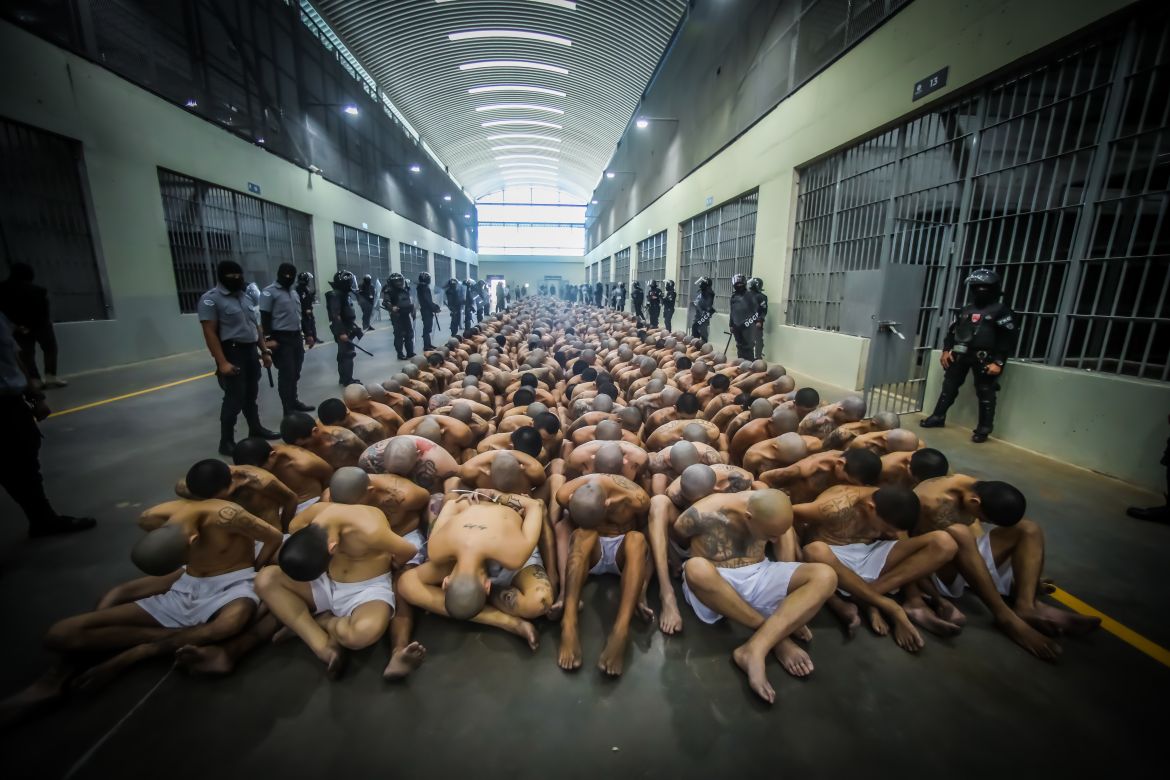
Worth noting its common for these gang members to be forcibly recruited as children or teens so even a lot of the tatooed ones are akin to child soldiers.
You must be Ho, with all that computer knowledge.
I kind of hate it when other people do it though, so I don’t. But admittedly it would be effective.


Fundamentalists of any religion do this.