

Basic Glitch
I write a blog that focuses on public information, public health, and policy: https://pimento-mori.ghost.io/
- 112 Posts
- 201 Comments












 15·9 months ago
🙄 reconstruction was a response to oligarchs who wanted to ignore progress. They have always fought laws and regulations that threatened their power. There was literally a civil war fought over this.
America’s unending struggle between Oligarchy and Democracy
Even after losing a war, they continued to scheme and manipulate others to stack the decks in their favor. They continued to do it after the first reconstruction, and the second reconstruction, and they will certainly do it again after the 3rd.
That’s why it is (and always will be) a completely bullshit argument that the safety nets, laws, and regulations created to keep these assholes in check, allegedly no longer serve a purpose and only serve to place an unfair burden on society based on the mistakes of the past.
The callousness, selfishness, and greed that fueled the “mistakes” of the past were never unique to the time period. They have always just been human flaws, and should serve as reminders that every human is corruptible. The worst traits of humanity are never just magically going to disappear someday. They exist in every corner of the world, under every government. They always have and they always will.
USSR
Uhh…
History should teach you that the co-founder of the Heritage Foundation was traveling around Moscow and Eastern Europe when the Soviet Union collapsed, but it never really gets talked about for some reason.
A conservative who essentially birthed Project 2025 and is famously quoted as saying “I don’t want everyone to vote,” was sneaking in computers and other electronics to Soviet dissidents while teaching soviet politicians all about American “democracy” just prior to the collapse.
Then he and several other members of Heritage were ready to fill the power vacuum and help establish the first go between for U.S. and Russian capitalist businesses.
“You capture the Soviet Union --I’m going to capture the states.”-Thomas Roe, Heritage Foundation board member and founder of the State Policy Network to fellow Heritage Foundation board member Robert Krieble.
In 1989, the Krieble Institute was created “to promote democracy and economic freedom in the Soviet Union and Eastern Europe.”
1989: A Republican in Moscow (WaPo article about Weyrich holding mock elections)
PBS Documentary about Weyrich and Krieble involvement in Collapse of USSR Playing For Power (2012)
•to move us from our undemocratic present to a more democratic future, we need to institutionalize our commitments to a more inclusive and responsive democracy in more durable forms. These might encompass everything from alternative economic regulatory institutions and new approaches to anti-discrimination to a more universal safety net that secures the essential guarantees of health, housing, and income that individuals and communities need to thrive.
•A second reconstructionist strategy lies in containing reactionary power and backlash. We should presume that there will always be efforts to roll back egalitarian expansions of democracy. Part of how democracies survive and thrive is through institutions that contain the potential resurgence of anti-democratic policies and forces. The democratic institutions of the future will similarly need to develop ways to contain authoritarian power. This will require laws and institutions that respond to techniques that are emerging in the current moment, such as new forms of state and private surveillance, or the weaponization of presidential control of funding flows.
•The third institutional transformation strategy is to democratize our governing institutions, making policymaking more directly responsive to and shaped by ordinary constituents. One important area is the balance of power between the branches. Even before Trump, the trend has been to centralize power in an imperial presidency. The legislature, by contrast, has been central to past moments of democratization. Any future reconstructionist agenda will need to be built on congressional majorities and a legislature willing to check and permanently shift away from the overreliance on presidential power.
Which socialist country would be the best example?
Capitalists only have the power they do because of the state, if we smash and replace it they have no power.
The state, as well as the public and private military and resources they hoard and control.
Like which countries specifically? Bc I can almost guarantee there is currently a far right disinformation campaign targeted at undermining that country’s government.
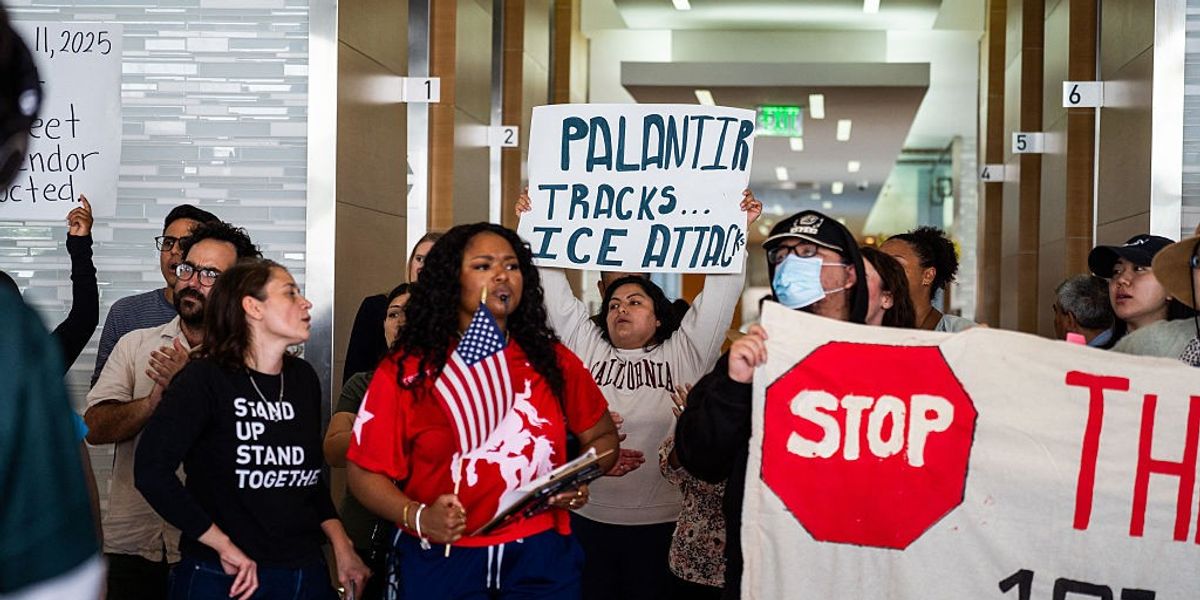
Ok, but how do we get there? How do we keep oligarchs, (like the ones who own Palantir and work with other oligarchs like Netenyahu using remote weapons of mass genocide to fight for them and gain ground in order to control others), from taking advantage of the power vacuum left by destabilization?
What makes you think oligarchs haven’t been continuing to undermine and dismantle the second reconstruction this entire time, and aren’t using their established global institutions (like banks, corporations, and conservative think tanks) to do exactly what they’ve been projecting and accusing progressives of doing?
Do you honestly think there isn’t a good chance a global cabal of far right conservatives might be ready to use their collective wealth and resources they hoard and pass down for generations to take full global control?
Or Steve Kangas on the Origins of the overclass and the crimes of the CIA
I don’t really get how that contradicts needing a 3rd reconstruction that dismantles the government agencies that carry out that kind of shit and didn’t even exist until WWII rather than dismantling a democracy?
you guys are just upset it is happening at home now and not Iraq.
Can’t argue with you there, but that’s also part of what makes me question who’s best interest would be dismantling U.S. democracy instead of dismantling specific agencies within the government, with no plan for where we go next?
Because it kinda seems like those agencies would carry on doing whatever they want even after a union fully dissolves. They would just have fewer obstacles in their way.
When you think about how an American agency, for example, the CIA operates this playbook in other countries, what is their intended goal?
Their goal is to destabilize a country in order to remove any obstacles to taking full control. They usually achieve destabilization by undermining public trust in a system and the leaders of that system, so that the public will either dismantle the government for them or be less resistant once it is dismantled (see the Soviet Union in the late 80s). Once that happens, they already hold all the resources and power, and install somebody they already have lined up.
Considering that there seems to currently be a global campaign to spread disinformation and install far right leaders across the globe, it makes me question if this is happening everywhere bc global destabilization is the goal.
Currently, just about anywhere in the world, who holds the majority of the resources? The people or a small group of oligarchs? When destabilization happens and a local government collapses who has the upper hand when it comes to filling the power vacuum?
The Case for a Third Reconstruction
The scale and depth of the attack on our institutions means that there is no simple way for a pro-democracy coalition to flip the lights back on after Trump. We need transformative thinking.

 1·9 months ago
Why are his eyes doing that?


Before PTSD was understood WWI Soldiers Suffered from ‘Shell Shock’
But in the case of the Trump administration, I also suspect there may be some cope snow involved.
 3·9 months ago
After learning what the shadowy forces of the U.S. and U.K. did to Australia back in the 70s I’m not sure I would be surprised to learn it wasn’t unrelated.
I’m not a clinical psychologist, I just knew a lot of people who were in a traditional clinical Psych PhD program, and PsyD was one of the path options they could take, if they wanted to become a medical psychologist/prescribe medication. Idk if it was just a short cut so they didn’t have to finish the full PhD program, but they had been accepted into a PhD program.
They still had to complete basic course work including stats, which was one of the only class where we overlapped. I don’t remember anyone ever doing stats by hand. I do remember the people who were clinical usually didn’t have to collect their own data or do any experiments for their M.S., but they also were more likely to use really high level stats analyses. I remember words like bootstrapping, and it seeming very complicated.
At one point I did use a massive data set for a class project to run forecasting or something? But post grad school, a 3-way anova is about as advanced as I’ve ever needed to get. There are people who do more advanced stat work in basic science, and use R instead of the easier programs, but it’s definitely not the norm from my experience. I guess it just depends on the size of the data set you’re analyzing and what you’re trying to do with it. For example, I was talking to somebody recently who worked in infectious disease, and she mentioned that the highest level stats she ever used was a t-test.
From my own experience (maybe it’s just a U.S. thing, idk) but there are people who do very important research without using very complicated stats, and there are people who do very important research and also use very complicated stats. There’s also often a collaborative effort where one side may be more involved in generating the data to a certain point, and the other has a very niche role where they take the research relay baton and do their complex voodoo that I don’t really understand.
There are also people in public health and other fields who don’t always do their own research, but still use giant data sets to answer very important questions. Then there seem to be some people in various fields who never design their own experiments or collect their own data, but recycle huge data sets over and over again for p-hacking using very complicated stats that I don’t understand.
I admit my experience is completely dependent on how science is conducted in the U.S., but even an 8 year PhD from a prestigious institution, plus a series of never ending post docs from other prestigious institutions, and the ability to do the most complicated stats, would not make me assume that person is necessarily smart or skilled in anything other than their own niche area of research.
The same is true for an MD or MD/PhD. They might be very smart in whatever residency they completed or whatever field they achieved their PhD, but how do they actually think about new information/approach problem solving?
I feel like we all grow up hearing way too often, that we’re all smart in our own unique way, (which is probably true), but most people tend to avoid acknowledging the fact that we’re all also very dumb in our own unique way. No single person can know everything, and no human or machine is ever completely free from error.
Empathy, respect and consideration for others, along with critical thinking, and fluid problem solving skills, are usually not things people learn in a classroom or lab. Unfortunately, those skills are also undervalued in society until the moment inevitably comes when they are desperately needed. Then, big surprise, most people don’t even know how to begin to think about ways to approach a new problem, because they never really learned to think outside of a rigid and sometimes biased box.
On the rare occasion they actually allow their ego to take a break for a moment, and try to think critically about a complicated problem, the ego will often snap back into place the moment anyone questions the off target consequences or downstream effects of their idea. This is another reason it can really pay off to have an entire team people who are uniquely smart and uniquely dumb in their own way, with varying degrees of education and life experience, all working together to solve a problem.
When you use any level of education as a tool to help you continue to think critically and solve new and challenging problems, that’s very helpful for all of society. When you allow your level of education to become your impenetrable ego, and act as a blinder/shield to even consider any information that seems like it might contradict what you already believe to be true, it becomes a danger to society.
Seriously. Everybody seems to be very eager to make our same mistake. It’s almost like there’s some kind of global disinformation campaign or something aimed at undermining democracy and installing ultra right wing leaders…
Well, goodnight.
Well a psychiatrist is a medical doctor. They aren’t really trained to counsel you.
No, but they are trained to diagnose you, and if they’re unwilling to actually listen to what their patient is trying to say, then they can’t really know what the problem is.
Another gate to PhD programs is you have to learn math statistics and do research. And many people want to be a therapist but don’t want to learn the math or do challenging research.
Most basic scientists: “How do I run an ANOVA in SPSS/Prism?”
I guess we’ve had different experiences. Not sure if you’re doing things like fMRI studies, but the majority of math I’ve encountered in basic science research has just been plugging data into a program. I suck at math, but I’ve always kicked ass at research, especially ideas for future directions, experimental design, problem solving, lit review and writing.
I know in my state at least there was at one point a Psy D program that people completed after getting their Psychology PhD. Most of those people were in clinical labs that actually seemed to be super into really advanced stats, and “making the data say whatever they needed it to say.” Which, ngl, always seemed like a kinda fucked up way to approach research, but I’m no stats whizz, so who am I to judge.
I was getting Bond villain vibes off the bat, but I guess I could see that.

I knew I had seen somebody wear that shirt before.
I understand, but the question is what happens to people when they get taken off the street? If the litmus test for locking somebody up against their will is “mental illness? Yes/no?” you have to consider how many non-violent people that includes.
What is the goal when you take someone into custody? Is it to help the person get treatment and get back on their feet, or is it just to take them away so you don’t have to see them/be bothered by them?
The reason it became more difficult to hold people against their will under Reagan was bc he wanted to make a bunch of efficiency cuts/close down mental health hospitals. If you have nowhere to send people for treatment, do you just throw all mentally ill people in with people who have committed violent crimes?
That’s what they used to do way back in the day, and they stopped doing it for good reason. You had horror stories of innocent and wrongly detained people being thrown into absolute hellholes (which nobody, even criminals should have been placed). I remember one case in a Pennsylvania sanitarium where due to issues with over crowding, a mentally ill man who was barely able to function on his own was just thrown into a cell with two violent individuals. They tortured and murdered him within 24 hours. Devolving back to this kind of practice isn’t a solution to treating mental illness, it just locks it behind closed doors so society doesn’t have to see it.
Under Trump, you have proposals like this to make it easier to hold people against their will, along with simultaneous cuts to public assistance for mental health and housing. You also have privatization and profiting by his administration and other politicians by taking advantage of an immigration system that detains people in mass. Aside from anyone’s beliefs on immigration, it’s important to consider how many people have just disappeared or died in these overcrowded detention centers.
It’s hard to imagine a more clear recipe for disaster, or a more slippery slope of making a broad exception to populations who deserves human rights and safety based on a relatively small subset of that population.
I said this in another reply, but the oligarchs breaking current systems and safety nets while creating policies that prey on vulnerable people in desperate situations for their own profit, actually display some pretty clear behaviors that indicate mental illness.
Call it callous and unemotional traits. Call it psychopathy. Call it whatever you want. Predatory behavior for personal gain is a danger to society. The day these people are comfortable being held against their will in the prisons they’ve created for their own profit, and forced to get “treatment” for their own mental illness, is the day I feel comfortable with them doing it to anyone else.
Yeah I’ve known a lot of these people as well.
In some states PsyDs are allowed to prescribe (but there might be limits on what they can prescribe vs a psychiatrist).
We don’t have enough regulations on mental health care. And it’s a bigger problem than people realize.
I agree 100% on there being a need to focus on evidence based practice, but I also don’t think that it necessarily as clear cut as a more rigorous degree = somebody will make a good therapist. A problem of not listening to/believing your patients is also a major issue in just about any healthcare setting (including mental health).
Example: I have ADHD and see a psychiatrist for that reason, but I learned pretty quickly a psychiatrist does not want to hear about your problems. (I think some old school psychiatrists are slightly better about this. Not old, old school, but there seems to be a divide between ones who did their residency in the 90s vs 00s and beyond in my state). Anyway, psychiatry also requires a more rigorous degree and a very long somewhat grueling and competitive residency, but it can be a pretty cushy job once you get established.
Most psychiatrists want to figure out what you need, prescribe it, and then just check in every few months to see if you need a dose adjustment. They (like most doctors unfortunately) don’t like to hear things that contradict what they already believe.
I saw mainly residents in the beginning when I finally started trying to address my lifelong ADHD problems in my 30s. Most immediately assumed I was just drug seeking, and kept treating me for depression instead of just believing me when I tried to explain myself. I ended up taking Wellbutrin for several years alongside my ADHD meds even though it had only been prescribed to me in the beginning bc the psychiatrist didn’t really think I had ADHD.
I wanted to stop taking it but nobody would just listen to me or believe me. Eventually I had to wean my dose down myself (do not take this as a recommendation to try, especially if you take any extended release medication) and just stop taking it altogether to convince my psychiatrist that I hadn’t needed anything other than the ADHD treatment in the first place.
Especially when it comes to getting psychiatrists to understand that people respond differently to different medications (especially extended release and generic meds) or combinations of medications, there are many psychiatrists who will just straight up refuse to believe their patients because “that shouldn’t be the case.”
I actually worked in a molecular bio lab for a while. The PI was a very rigorous scientist (in her own way) and had done some pretty incredible work in her area of research. However, she was also one of the most stubborn and hard headed individuals I’ve ever known, and it was exhausting. I remember her randomly going off once about stupid uneducated people not understanding there’s no difference between a generic drug and a name brand drug other than price.
Except we know that there are many factors that can actually change the way an individual body processes and metabolizes medication, including hormones and gene polymorphisms. We know that some companies use different fillers and binding ingredients in their recipe, and there’s also been cases where generic drug manufacturers have been shut down for poor quality control.
If you have patients noticing their medication suddenly isn’t helping, and then seeking answers, and you have scientists and medical doctors both rushing to the same conclusion and dog piling on this somewhat outdated belief about generic drugs, you end up with people being gaslit and told they’re just being difficult/making things up. Think about all the times people tried to tell their doctor their medication wasn’t working, and were dismissed because “that shouldn’t be the case.”
That’s a pretty dangerous attitude to have in science and medicine. Science isn’t supposed to be a religion. You’re supposed to be skeptical and question things. In medicine you’re supposed to treat the patient, not the disease. Yet there are people in science and medicine who become so rigid in their beliefs, biases, and established ways of thinking that they essentially make it their unquestionable religion. God help you if you challenge their beliefs regardless of what evidence you may have to present your case. It’s toxic and it ends up placing the ego of the doctor or scientist above the well being of the patient or research.
I think like most things, it’s a pendulum that shouldn’t be swinging too far one way or the other. There are plenty of quacks out there who use woo woo to grift and destroy people’s lives, but there are also a scary number of highly educated and trained doctors who refuse to treat the patient not just the symptoms. They’re both dangerous in their own ways and they both erode trust.
I ended up also seeing a PsyD just to get an official evaluation and diagnosis, because most accommodation arrangements require a behavioral assessment, not just the diagnosis from a psychiatrist. I definitely think the standard evaluation process could use some tweaking and updating from psychologists with a research background, but I can also see why you would want a behavioral assessment from a clinician in addition to a psychiatrist diagnosis.
As far as therapists go, surprisingly, I’ve found social workers who obtained a license for clinical therapy to be the most helpful and willing to really listen to the individual. I’ve also found help in some nontraditional and unexpected areas that were recommended by my therapist like somatic breathing and stretching. Obviously it’s not a guarantee this is what each person will benefit from, but again, it just kind of seems like a pendulum situation/don’t throw the baby out with the bathwater.
I think ideally, a team of professionals working together and in some basic level of communication with each other to coordinate care, would result in the best outcome for patients. But the more administrative health policy relied on efficiency as the ultimate goal of measure of determining best practices, the further the pendulum swings away from that ideal.
They are attempting to undermine and dismantle it. It took over 50 years of scheming and clawing their way into government to gain enough power to try and tear down from the inside out.
And they will continue to attack and try to dismantle it. That’s what enemies and bad actors will always do. That’s why the article lays out a strategy for creating a system that allows more flexibility in response to these attacks.